Complaints Procedure for Flat Clearance Catford
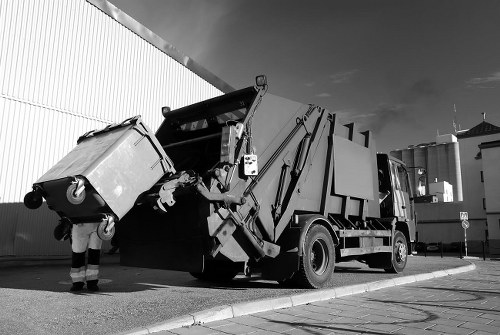 Introduction: This document sets out the formal complaints process for Flat Clearance Catford services and related waste removal activities. It is intended to provide a fair, transparent and timely route for anyone who wishes to raise concerns about the standard of service, behaviour of operatives, disposal practices, or any other aspect of a clearance job. The purpose is to resolve issues efficiently while ensuring compliance with regulatory obligations and internal policies.
Scope and definitions
The procedure applies to complaints relating to Catford flat clearance, rubbish collection from residential premises, and related ancillary services provided within the company's defined service area. For the purposes of this policy, a complaint is any expression of dissatisfaction made by a customer or third party about the company’s service delivery, either written or verbal. Minor service queries that can be resolved immediately are treated as service enquiries rather than formal complaints.
How to raise a complaint
Complaints should be raised promptly after the event so that the company can investigate while details remain fresh. Complainants should clearly state the nature of the issue, the date and location of the clearance, and any supporting information such as photographs. The company recognises complaints from occupants, landlords, managing agents, or neighbours impacted by clearance activity. All complaints are logged and acknowledged in writing within a stated timescale.Acknowledgement and initial assessment — On receipt, each complaint will be logged and given a unique reference. The company aims to acknowledge receipt within 3 working days. An initial assessment determines whether immediate remedial action is needed to prevent further harm or disruption. If the issue is urgent, swift action may be taken before a full investigation is completed. Acknowledgement communication will outline the next steps and expected timeframes.
Investigation process — Investigations are proportionate and impartial. Investigators will gather relevant records, speak to the operative(s) involved, and obtain any photographic or documentary evidence provided by the complainant. The process may include a site inspection where appropriate. All facts are considered before conclusions are drawn, and sensitive information is handled with confidentiality.
 Resolution and remedies — Once the investigation is complete, the company will decide on appropriate remedies which may include an apology, corrective action, partial or complete refund, or an offer to re-attend the property to rectify the issue. Remedies are proportionate to the impact of the failure. Outcomes are communicated in writing and include reasons for the decision and any steps taken to prevent recurrence.
Escalation and review
If a complainant is dissatisfied with the outcome, they may request an internal review. The review will be conducted by a senior manager not previously involved in the complaint. Reviews focus on process fairness and whether the original decision was reasonable in light of evidence. Internal reviews will be final within the company's internal framework, and the outcome will be documented.Timescales — The company endeavors to resolve most complaints within 20 working days from acknowledgement. Complex cases requiring external third-party input or detailed technical assessment may exceed this timescale; where this occurs, the complainant will be kept informed of delays and an expected revised completion date.

Record keeping and data protection
Records of complaints, investigations and outcomes are retained in accordance with data protection and retention policies. Records include the complaint details, correspondence, investigation notes and remedy actions. Personal data is processed lawfully and minimised to what is necessary for resolving the complaint. Complainants may request access to their complaint records in accordance with applicable data rights.Confidentiality and impartiality — The company treats complainants and staff fairly; confidentiality is maintained wherever possible during investigations. Conflicts of interest are managed through reassignment of investigative responsibility if necessary. Staff are reminded of professional standards and the need to cooperate with fair reviews.
Monitoring and continual improvement — Complaints are used as a constructive tool to improve service delivery across the flat removal Catford and rubbish clearance operation. Managers review complaint trends and implement corrective actions, training, or process changes to reduce recurrence. Regular reporting supports accountability and operational learning.
 Final remarks — This complaints procedure is designed to be clear, equitable and transparent for anyone affected by Catford flat clearance services. It aims to ensure that issues are acknowledged quickly, investigated thoroughly and resolved fairly. The company values feedback that can be addressed through this formal route and is committed to upholding standards across its waste management and clearance services.
- Scope: Covers flat clearances and associated rubbish removal services.
- Response times: Acknowledgement within 3 working days; standard resolution target within 20 working days.
- Escalation: Internal review by a senior manager if dissatisfied with the initial outcome.